Overheating is one of those warnings that can feel vague at first. The temperature gauge creeps higher than you expect, the heater changes output, or the dashboard throws a light that does not explain much by itself. Some vehicles recover quickly once you’re moving again, which can make you wonder if it was even real.
If you want to avoid the repeat version of that moment, it helps to know what to look for and what to do next.
How Overheating Usually Starts
Most overheating problems begin as a small loss of control in the cooling system. The engine generates heat constantly, and the system’s job is to remove it consistently. When something interrupts flow, airflow, or pressure, temperatures can climb faster than you’d think.
The tricky part is that the first weak link is not always dramatic. A slightly low coolant level, a slow fan, or a sticking thermostat can behave fine in mild weather, then struggle in traffic or on longer drives. Patterns matter more than one isolated spike.
Low Coolant And The Leaks That Cause It
Low coolant is one of the most common reasons engines run hot. Coolant does not get used up, so a low level usually points to a leak or a past fill that never fully burped air out of the system. Small leaks can evaporate on hot surfaces, so you might not see a puddle on the ground.
Leaks often show up at the hose ends, the radiator, the reservoir, or the water pump area. If you smell something sweet after shutdown, or you notice crusty residue near a hose connection, that can be a clue. Keeping the level correct buys you protection, but finding the reason it dropped is what prevents the next overheating event.
Thermostat, Fans, And Airflow Issues
A thermostat that sticks can restrict coolant flow at the wrong time. If it sticks closed or only opens partway, the engine can heat up quickly, especially on the highway. If it sticks open, the engine may run cooler than expected, but that can still lead to odd temperature swings as conditions change.
Cooling fans matter most at idle and low speed, when the car is not pushing air through the radiator on its own. A weak fan motor, a faulty relay, or a bad temperature sensor can let temps climb in stop-and-go traffic. If the A/C stops cooling well at idle while the temperature rises, that combination often points toward an airflow problem.
Radiator, Water Pump, And Belt Problems
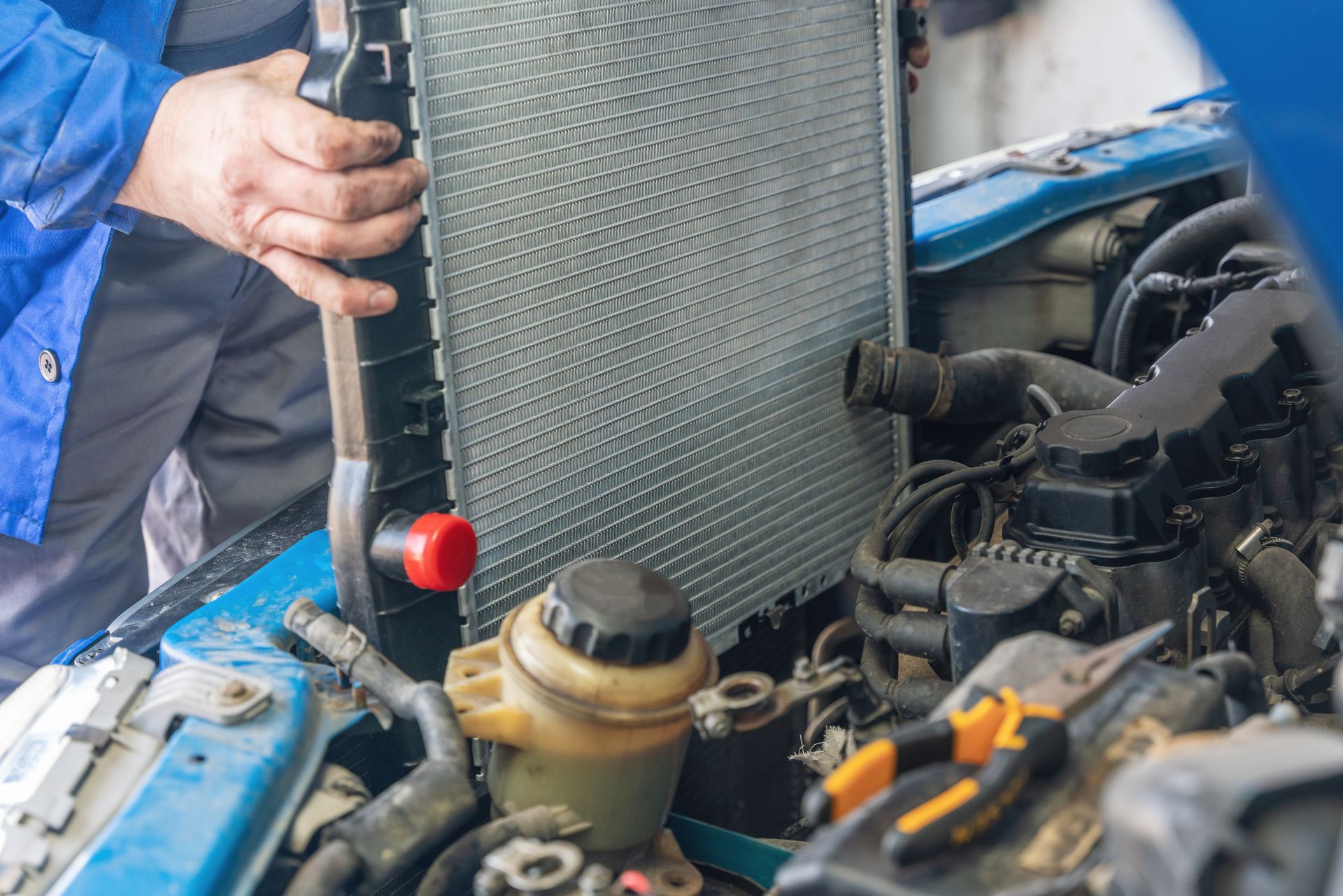
Radiators can clog internally over time, and they can also get blocked externally by dirt and debris. Either way, heat transfer drops and the system has to work harder to hold the same temperature. Some clogs only show their effects under load, which is why a car can feel fine around town but struggle on longer drives.
Water pumps and drive belts are another common source of trouble. A worn pump may not move coolant efficiently, and a belt that slips can reduce pump speed even if it still looks intact. During an inspection, we also look for seepage at the pump weep hole and for wobble that hints at a bearing issue.
Early Warning Signs Worth Taking Seriously
Overheating rarely starts with steam pouring out of the hood. More often, it begins with subtle symptoms that repeat in the same conditions. Paying attention early can keep the repair focused and prevent secondary damage from heat.
Here are a few signs that should move cooling system checks higher on your list:
- Temperature rises in traffic, then drops once you’re moving
- Heater output goes warm, then cool, then warm again
- The coolant reservoir level keeps dropping between checks
- The radiator fan seems loud one day and silent the next
- You notice a sweet smell or dampness near the front of the engine
If any of these are happening, try to avoid long idles and heavy loads until it’s checked. A quick look now can prevent a bigger repair later. Heat is hard on gaskets and seals, so repeated overheating is the part you want to avoid.
Prevention That Actually Works Long Term
The best prevention is keeping the system clean, sealed, and filled with the correct coolant. That includes checking levels occasionally and watching for early leaks, but it also means staying on top of coolant condition so corrosion protection does not fade. This is one of the simplest ways regular maintenance protects the engine without you having to think about it daily.
It also helps to address small cooling issues before they stack up. If a fan is intermittent, a hose is soft, or a cap is not holding pressure well, fixing that early tends to be straightforward. We’ve seen plenty of overheating complaints disappear once the root cause is handled, instead of repeatedly topping off and hoping it holds.
Get Overheating Repair In Spring Hill, TN With Spring Hill Automotive Center
If your temperature gauge has been climbing or you’re losing coolant, Spring Hill Automotive Center can check the cooling system, pinpoint the cause, and help you prevent repeat overheating with a practical plan.
Set up a visit before the next hot drive turns into an unwanted warning light.