Transmission problems can make a car feel strange before they become obvious. A shift feels late. The engine revs a little too high. Reverse takes an extra second to engage. The car still moves, so it is easy to hope the symptom was nothing.
That is where transmission trouble can get expensive. The transmission depends on fluid pressure, clean fluid, electronics, sensors, clutches, seals, and moving parts, all working together. When something starts slipping, overheating, leaking, or shifting poorly, waiting can add heat and wear to parts that are already under stress.
1. Delayed Engagement Into Drive Or Reverse
When you shift into drive or reverse, the vehicle should engage without a long pause or hard bump. A slight delay on a cold morning may happen on some vehicles, but a delay that gets longer or feels harsher deserves attention.
Delayed engagement can point toward low fluid, worn internal seals, pressure loss, valve body trouble, or electronic control issues. If the vehicle sits for a second and then suddenly clunks into gear, the transmission is not applying as cleanly as it should. That symptom is worth checking before it turns into slipping or failure to move.
2. Slipping During Acceleration
Transmission slipping usually feels like the engine is revving, but the car isn't accelerating as it should. You press the gas, the rpm climbs, and the vehicle seems to lag behind. It may catch a moment later, or it may feel weak under load.
Slipping often shows up when merging, climbing hills, pulling away from a stop, or passing another vehicle. Low fluid, worn clutches, old fluid, pressure problems, or torque converter issues can all be involved. Slipping creates heat, and heat is one of the biggest enemies of transmission life.
3. Rough, Harsh, Or Jerky Shifts
A transmission should shift in a way that feels consistent. Some vehicles shift firmer than others by design, but sudden harsh shifts, bangs, jerks, or unpredictable gear changes are not normal. You may feel the car lurch between gears or bump when slowing down.
Harsh shifting can come from old fluid, low fluid, worn mounts, sensor problems, software issues, solenoid trouble, or internal wear. The transmission may still be working, but it is not controlling gear changes cleanly. A road test and diagnostic scan can help show whether the issue is hydraulic, electronic, mechanical, or related to another system.
4. Transmission Fluid Leaks
A transmission fluid leak should not be ignored, even if it only leaves a small spot. Transmission fluid lubricates parts, carries heat, and helps create the pressure needed for shifting. If the level gets low, the transmission can slip, overheat, or shift poorly.
Fluid may appear red, pink, amber, or brown depending on age and fluid type. Leaks can come from cooler lines, axle seals, pan gaskets, case seals, or other fittings. Some vehicles do not have an easy dipstick, so checking the level requires the correct process. Topping off fluid without finding the leak is only a temporary step.
5. Burning Smell Or Overheating
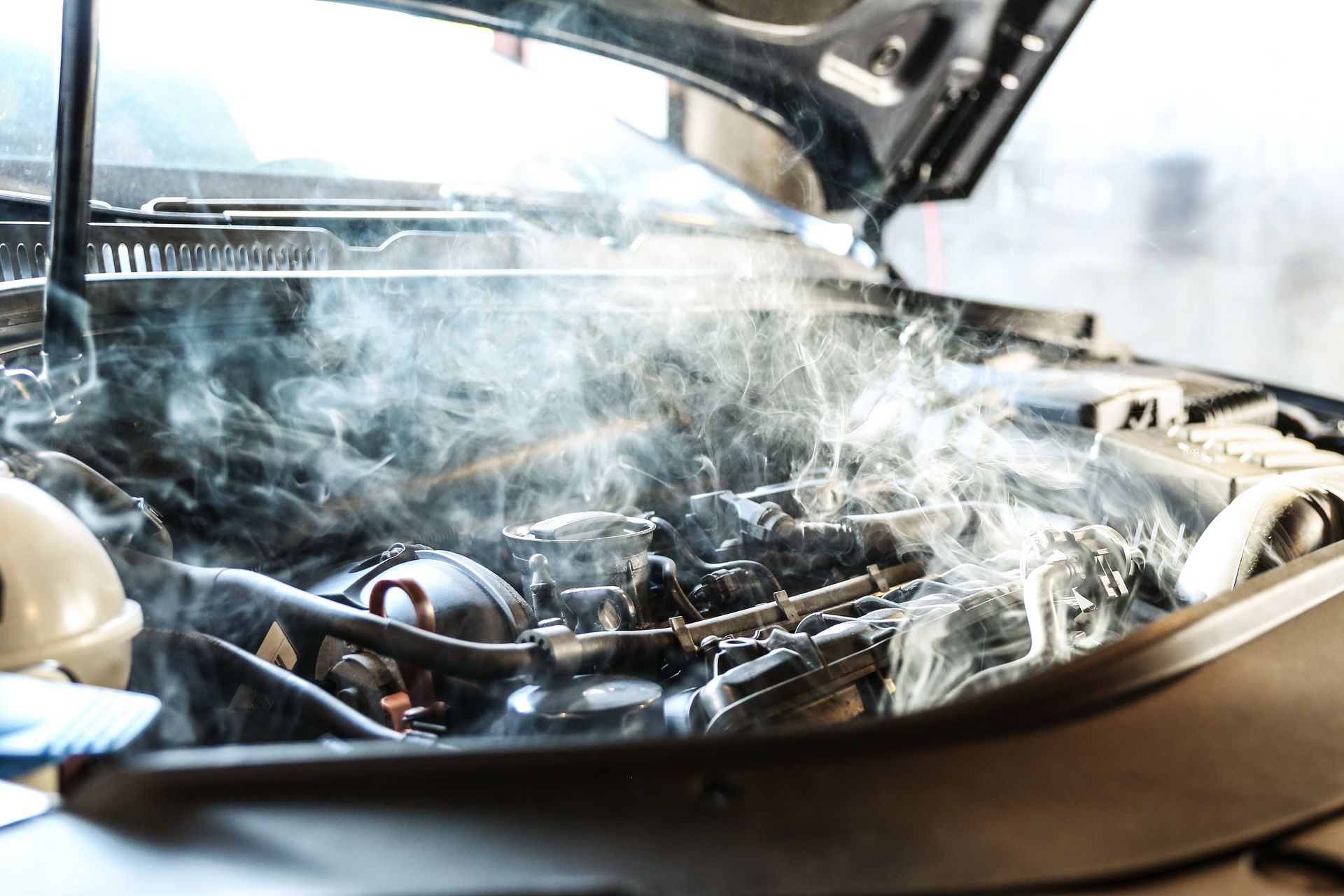
A burning smell can indicate that the transmission fluid is overheating. Overheated fluid loses its ability to protect parts and control friction. Once fluid breaks down, the transmission can shift worse, slip more, and create even more heat.
You may notice the smell after traffic, hills, towing, highway driving, or stop-and-go use. Some vehicles may also show a transmission temperature warning. If the vehicle smells burnt, shifts oddly, or feels weak, it is better to stop pushing it and schedule an inspection.
When Transmission Symptoms Need Fast Attention
Some transmission symptoms are more urgent than others. If any of these happen, it is safer to have the vehicle checked before driving much farther:
- The car will not move in drive or reverse
- The transmission slips badly under light throttle
- A burning smell comes with weak acceleration
- Fluid is dripping quickly
- The transmission warning light turns on
- The vehicle bangs hard into gear
- The engine revs, but the road speed does not increase
These signs can indicate low fluid levels, overheating, pressure loss, internal wear, or control problems. Regular maintenance helps catch fluid issues and leaks early, but active slipping or harsh engagement needs a focused diagnostic.
Why Early Transmission Testing Saves Money
Transmission problems overlap with engine, axle, mount, and sensor problems. A shudder during acceleration could be the torque converter, but it could also be an engine misfire. A harsh bump could be the transmission, but worn mounts may be making it feel worse. That is why testing matters.
A proper inspection can include checking fluid condition, looking for leaks, scanning for codes, reviewing live data, road testing the vehicle, and checking related drivetrain parts. The goal is to find the cause before heat and wear turn a smaller concern into a major transmission repair.
Get Transmission Repair In Spring Hill, TN, With Spring Hill Automotive Center
If your vehicle has delayed shifts, slipping, rough gear changes, fluid leaks, burning smells, or transmission warning lights, Spring Hill Automotive Center in Spring Hill, TN, can inspect the system and explain what is happening.