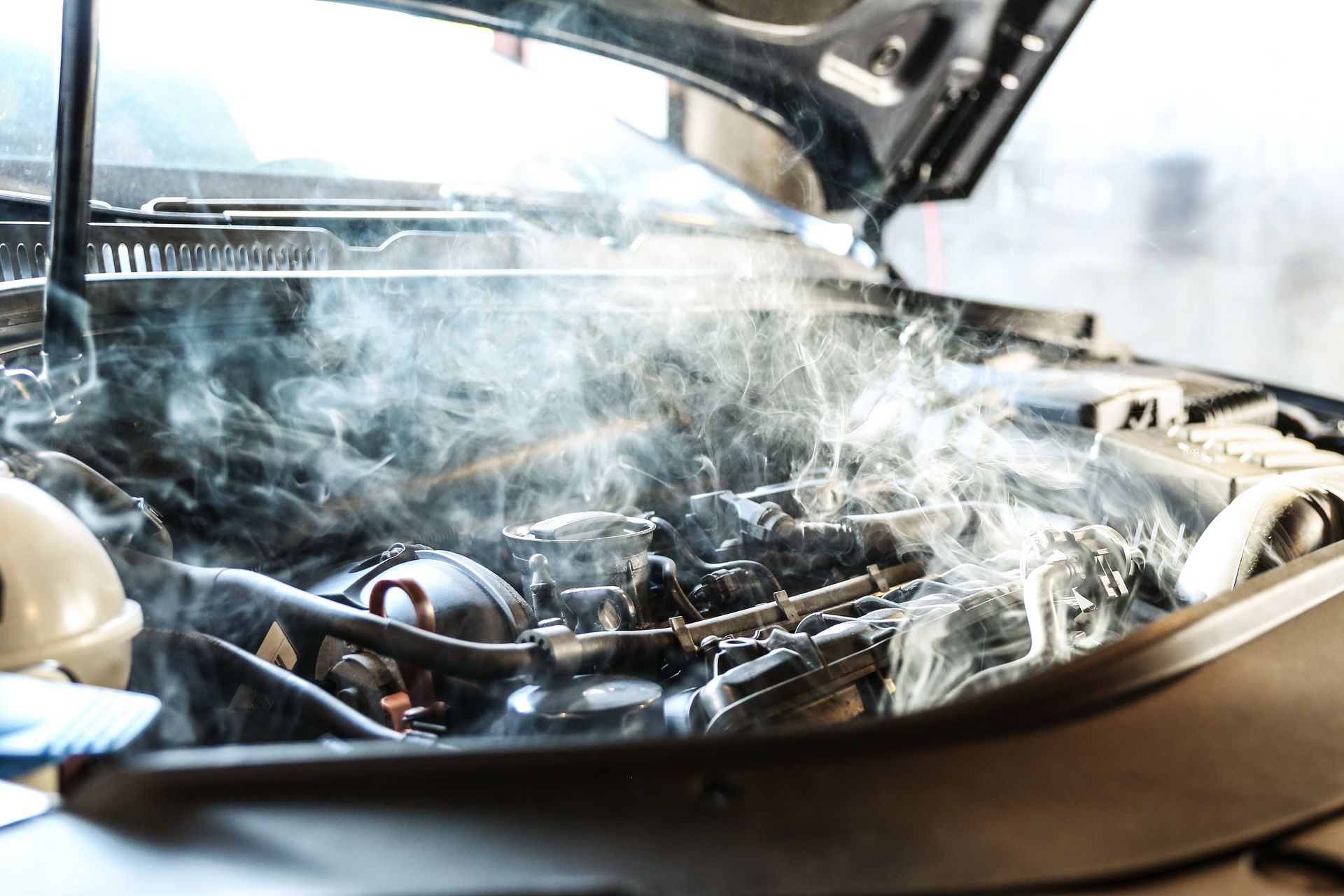
The temperature warning appeared first. Later, after the engine cooled, you found coolant around the radiator. It's tempting to connect those events and assume the overheating cracked the radiator. But the order you noticed them in isn't necessarily the order they happened in.
A slow radiator leak can lower the coolant level until the engine overheats. Excessive heat can also damage an already weakened radiator. Sorting out that sequence is part of the repair, because replacing the wet part alone might leave the original cooling problem untouched.
Excessive Heat Can Damage a Vulnerable Radiator
Radiators are built to handle normal operating temperatures and repeated expansion. Overheating pushes the assembly beyond those expected conditions. Plastic tanks, seals, hose connections, and joints can be stressed by excessive heat and the associated operating conditions. An aged tank with a weakened area is more vulnerable than one in sound condition.
Still, an overheating event doesn't automatically mean the radiator has cracked. Coolant might escape through a pressure cap or a hose connection while the radiator remains intact. The assembly needs a leak check after it cools.
The Leak Might Have Started Before the Warning
A radiator can seep while hot without leaving a puddle overnight. Coolant can evaporate from hot surfaces or collect in an undertray, and the level can gradually drop. By the time the driver sees a temperature warning, the leak has already been present.
Look back at earlier changes: a sweet smell, occasional reservoir top-offs, or inconsistent heater output. At our shop, we use those details alongside residue patterns and pressure testing. A dried trail can show that coolant has escaped before, although it cannot tell us exactly when the crack formed. It helps establish the sequence without pretending to date the damage precisely.
A Pressure Cap Doesn't Prevent Every Overheating Event
The cooling system operates under controlled pressure, which raises the coolant's boiling temperature. The cap must hold and release pressure according to its specification. A cap that opens too early reduces that protection; the wrong rating or a faulty relief function introduces other concerns. Both the cap and its sealing surface need checking.
Pressure control isn't the same as cooling capacity. Even a working cap cannot make a failed fan move air or make a stuck thermostat circulate coolant correctly. Don't install a higher-pressure cap to keep coolant in. That changes the load on other components without correcting the reason the engine is getting too hot.
Find Out What Stopped the System From Cooling
Overheating in slow traffic can point to fan operation or restricted airflow. Trouble during sustained climbing raises questions about coolant circulation, radiator performance, and available cooling capacity. Those are starting points, not automatic part verdicts. Low coolant can affect the system under several different driving conditions.
An inspection can include fan commands, actual engine temperature, thermostat behavior, pump operation, and blocked fins or passages. Air trapped after previous cooling work is relevant, too. Tell the shop about recent repairs, not just the latest warning. A new thermostat or pump on the invoice doesn't prove the system was filled and bled correctly afterward.
Check for Engine Damage When the Evidence Calls for It
Severe overheating can affect engine sealing as well as the radiator. Repeated coolant loss, abnormal pressure behavior, persistent misfires, or contamination can justify further testing. None of those observations alone proves a head gasket has failed. A chemical test, pressure test, or cylinder-related test must be chosen and interpreted for the complaint.
The opposite relationship is possible as well: combustion leakage can contribute to cooling-system pressure and overheating before a radiator leak is noticed. We don't assume a larger repair from one damaged tank, but we don't ignore supporting evidence either. The goal is to distinguish a localized radiator failure from a problem involving the engine itself.
The Repair Needs a Complete Heat Cycle
A cooling repair isn't finished when the reservoir is filled and the engine starts. The job includes the right coolant, proper air removal, fan operation, and leak checks. The vehicle should reach operating temperature under suitable conditions, then be checked again after cooling. A level measured hot cannot be compared directly with a cold mark.
For the owner, the immediate rule is simpler: don't keep driving an overheating engine to see whether the temperature comes down. Find a safe place to stop and shut it off. Never open the cooling system while hot or pour cold water over hot engine parts. Level checks during regular maintenance provide a baseline, but unexplained loss needs investigation before the next long drive.
Get Radiator And Cooling System Service In Spring Hill, TN, With Spring Hill Automotive Center
Spring Hill Automotive Center in Spring Hill, TN, can assess radiator damage and investigate what caused the overheating. Bring the sequence of warnings and coolant changes you noticed.
Contact us to discuss the overheating event and arrange the appropriate cooling-system checks.