Filters are easy to forget because most of them do their work quietly. The engine can still start with a dirty air filter, the A/C can still blow through a clogged cabin filter, and an aging fuel filter may not cause an obvious problem until the engine is working harder.
That does not mean every filter needs to be replaced at every service. Each one has a different job and service schedule. What matters is knowing which filters your vehicle uses, checking their condition when appropriate, and replacing them before restriction or contamination starts affecting another system.
A Dirty Engine Air Filter Can Restrict Airflow
The engine air filter keeps dust, sand, leaves, and other debris from entering the intake. As dirt collects between the filter pleats, airflow becomes more restricted.
Modern engines can compensate for a moderately dirty filter, so a little dust does not automatically cause poor fuel economy or weak performance. A severely restricted filter is different. Under heavier acceleration, the engine may struggle to pull in the amount of air it needs.
You might notice reduced power at higher rpm, slower acceleration, or an engine that feels more restricted under load. At our shop, we look between the pleats and check the filter material for heavy debris, damage, moisture, or collapse, rather than replacing it just because the surface looks slightly dark.
A Clogged Cabin Filter Makes the HVAC Work Harder
The cabin air filter cleans the air entering the passenger compartment. It catches pollen, dust, leaves, and road debris before that material reaches the blower and HVAC housing.
When the filter becomes heavily restricted, airflow through the vents can drop even with the fan turned to high. That affects more than comfort. Weak airflow can make the A/C feel less effective and cause the windshield to take longer to clear when you need defrost.
Common signs include:
- Weak airflow from several vents
- A blower that sounds loud without moving much air
- Musty or dusty odors
- Poor windshield defrosting
- Leaves or debris around the filter housing
- Cooling or heating that takes longer than before
If airflow improves after you remove the filter during testing, that gives us a strong clue that restriction was part of the problem.
A Restricted Fuel Filter Can Show Up Under Load
Not every modern vehicle has a separately serviceable fuel filter. On some cars it is part of the fuel-pump assembly, while other vehicles still have an external filter with a scheduled replacement interval.
When a serviceable fuel filter becomes restricted, the engine may receive enough fuel to idle and cruise normally but struggle when demand increases. You might notice hesitation during hard acceleration, weak power on a hill, or longer cranking.
We check fuel pressure and delivery before blaming the filter. A weak fuel pump, injector problem, electrical fault, or pressure-control issue can create similar symptoms. If the filter is part of the maintenance schedule, changing it on time helps protect the rest of the fuel system from contamination.
The Oil Filter Protects Parts You Cannot See
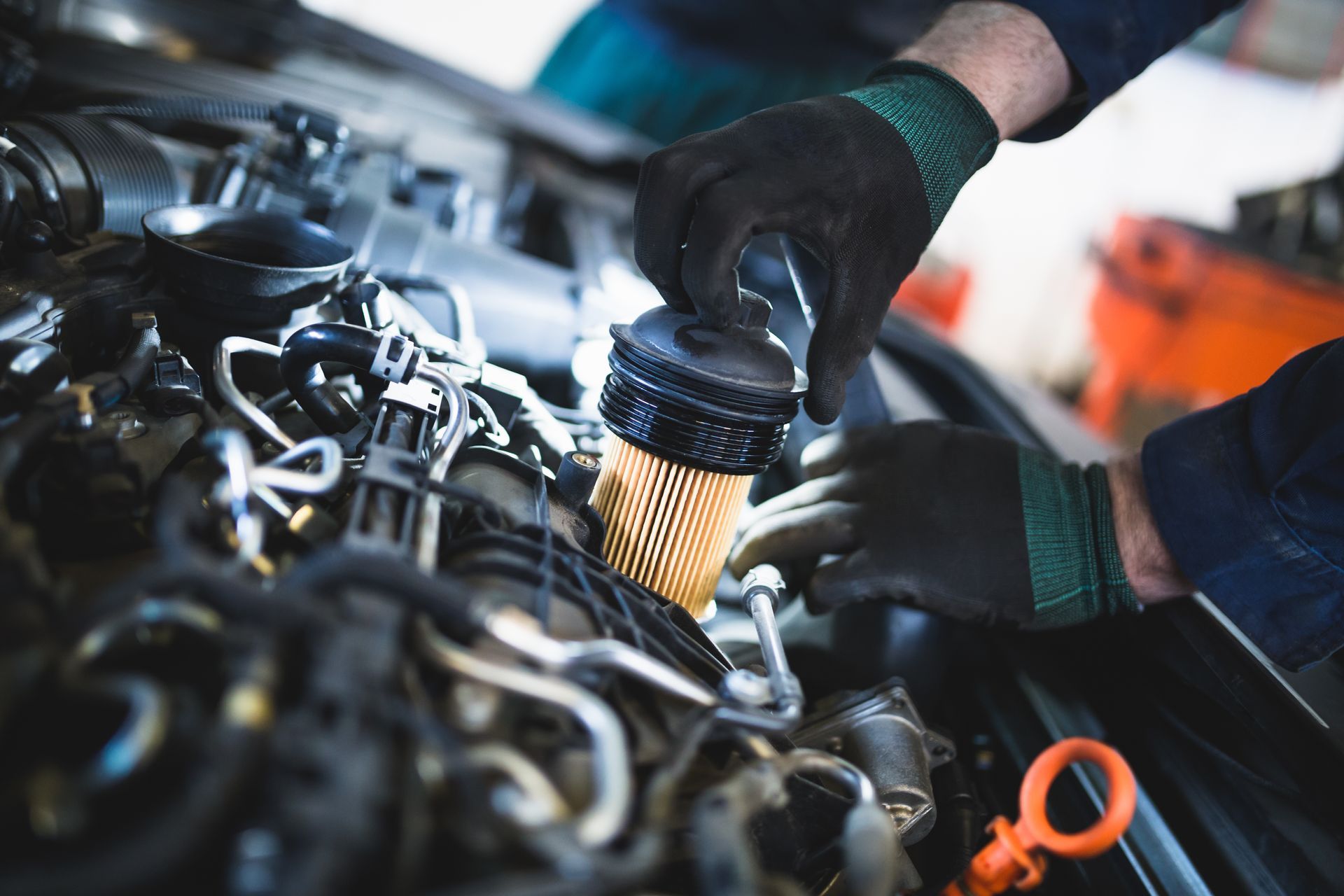
The oil filter traps particles circulating through the engine oil. Every time the engine runs, oil passes through the lubrication system to bearings, camshafts, timing components, and other moving parts.
A quality filter matched to the engine is designed to handle the normal oil-change interval. Leaving the filter in service far too long can allow contamination to build, and a severely restricted filter may force oil through a bypass system rather than through the filtering media.
That is why the filter is normally replaced along with the engine oil when the service procedure calls for it. Regular maintenance also gives us a chance to notice metal debris, oil leaks, or unusual contamination instead of treating the oil change as nothing more than adding fresh fluid.
Dirty Filters Can Cause Problems Beyond the Filter Itself
A restricted filter can make another system appear to be failing. A clogged cabin filter can make you think the blower motor is weak. A restricted engine air filter can lead you toward engine-performance testing. A fuel-delivery problem may first feel like an ignition misfire.
That is why we check basic service items before jumping to more complicated repairs. During an inspection, we consider the filter condition alongside the actual symptom. Replacing a clean filter won't fix a weak fuel pump or a failing A/C system, but overlooking a badly clogged filter can send the diagnosis in the wrong direction.
Filter Replacement Intervals Are Not All the Same
There is no single mileage that applies to every filter on every vehicle. Engine air and cabin filters may need attention sooner in dusty environments, construction areas, or vehicles that regularly collect leaves and debris around the air inlets.
Fuel and oil filter requirements depend heavily on the vehicle design and manufacturer schedule. Some filters are easy to inspect visually, while others should be serviced on a specified interval rather than waiting for a noticeable symptom.
We prefer to use the vehicle's service information and the filter's actual condition rather than replacing every filter as part of a generic mileage package. That keeps the maintenance useful instead of turning it into unnecessary parts replacement.
Get Car Filter Replacement In Spring Hill, TN, With Spring Hill Automotive Center
If you are not sure when your engine air, cabin air, fuel, or oil filters were last serviced, Spring Hill Automotive Center in Spring Hill, TN, can check which filters your vehicle uses and determine which ones actually need attention.